Mbappé’s Cultural Misstep: A Lesson in Sensitivity
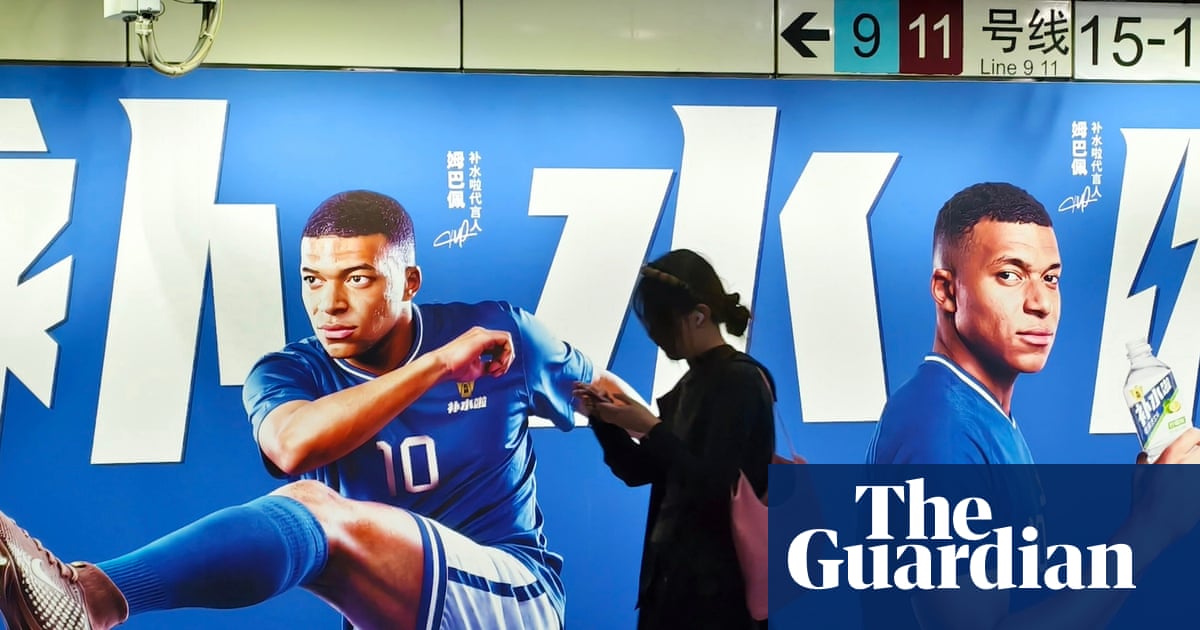
Kylian Mbappé is having a rough week. Instead of celebrating his chance at the Ballon d’Or, the French superstar has found himself embroiled in a controversy that has seen him dropped by brands and criticized for “offending the feelings of the Chinese people.”
It all kicked off when a video surfaced of the Real Madrid forward joking about a meme that included Mao Zedong, China’s former leader. Almost immediately, the backlash erupted. Social media lit up with criticism, brands pulled their sponsorships, and La Liga had its matches yanked from state television in China.
On Tuesday, Mbappé issued an apology, saying, “My comment was ill-judged, and I now understand that it hurt many people in China.” La Liga also released a statement expressing regret over the incident, emphasizing the offense caused to Chinese fans.
This isn’t an isolated incident; brands like Mercedes and Versace, and celebrities like John Cena and Katy Perry, have faced similar repercussions for stepping on China’s political toes regarding sensitive subjects like Tibet and Taiwan. Mbappé’s situation underscores how deeply Mao’s legacy continues to resonate in China, even half a century after his passing.
In the controversial video, Mbappé jokingly referred to a meme featuring himself and “a guy … I think he was a Chinese dictator.” It was a light-hearted reference, but it quickly spiraled out of control, leading to widespread condemnation. The app Dongqiudi was quick to denounce his comments, stating, “we cannot translate them” due to their offensive nature.
While Chinese media reported on the fallout—brands distancing themselves and the China Football Association lodging a formal protest—they largely avoided detailing the exact nature of Mbappé’s remarks. By Wednesday morning, the topic was still a hot trend on Chinese social media, with one hashtag related to his apology racking up over 600 million views.
Many social media users were left perplexed, asking, “What did he actually say?” As Manya Koetse noted, “Many netizens without a VPN are still left in the dark about why all the talk about boycotting Mbappé is happening.”
The anger from fans reflects a deeper misunderstanding of China’s historical context. Mobo Gao, a professor of Chinese studies, explained that Mao is viewed very differently in China compared to the West, where he often faces criticism. “For the majority of the [Chinese] people, Mao was and is still not seen as negatively as it is believed in the west,” he stated.
Mao, as the founding leader of modern China, is a complex figure. His policies led to significant suffering, like the Great Leap Forward—a disastrous campaign that caused millions of deaths. Yet, the ruling Communist Party still celebrates him as a revolutionary hero, despite acknowledging the excesses of his later policies.
Gao pointed out the ongoing tension between those who admire Mao and those who revile him, a divide that has only intensified as China's economic growth slows. Interestingly, some younger Chinese are reportedly feeling nostalgic for Mao’s era, viewing it as a time of greater equality—something the CCP is keen to manage.
Jennifer Pan, a Stanford professor, noted that our understanding of public sentiment in China is limited due to censorship and the challenges of conducting independent research. “What we see is that companies, platforms, broadcasters, and the foreign ministry moved together quickly,” she explained. “Did this follow public anger, or did this produce public anger? It’s hard to tell.”
Regardless of the cause, the financial implications for Mbappé are significant. His endorsements in China could amount to around $30 million a year, making his situation even more precarious. As Mark Dreyer pointed out, once a brand decides that someone has crossed the line, there’s a rush to cut ties to appear patriotic.
The rapid apologies from both Mbappé and La Liga indicate a desire to avoid a fallout like that of the NBA, which faced a long-term ban in China after a controversial tweet in 2019. La Liga may have a better chance of recovery, as state broadcaster CCTV indicated they would consider Mbappé’s next steps seriously.
On Wednesday, a foreign ministry spokesperson acknowledged Mbappé's apology, suggesting there might be a path to reconciliation. “We take seriously the apology the individual concerned has made,” said Guo Jiakun, indicating a potential for resolution, albeit with cautious optimism.
It’s a complex situation, one that highlights the sensitivity surrounding historical figures like Mao in contemporary China.


