The Ballon d'Or Returns to England: Celebrating the Legacy of Stanley Matthews
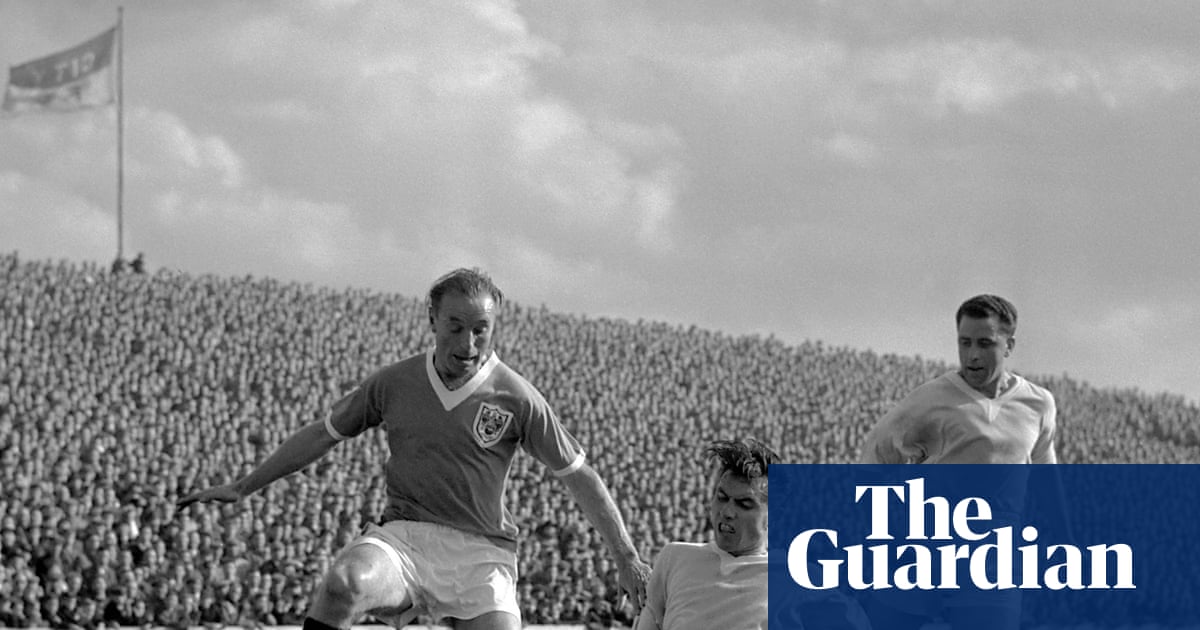
As football's elite gather at the London Palladium on Monday for the Ballon d'Or ceremony, it marks a significant return to England, 70 years since its first presentation at Blackpool town hall. Back then, Stanley Matthews stood before the visionary Gabriel Hanot, the editor of L’Équipe, who brought the idea of recognizing the world’s best player to life.
Matthews, who was then 41 and famously abstained from alcohol, received a special china plate alongside the award from the local mayor. "It was a pretty low-key affair, just a simple acknowledgment," recalls his son, Stanley Matthews Jr. He, along with his sister Jean and her daughters, will be present at this year’s ceremony. "It’s amazing how much it has evolved into the grand spectacle it is now. We’re thrilled to be part of it."
The decision to hold the ceremony in England this year pays tribute to a football legend who became the first active player to be knighted in 1965, just a few months before he hung up his boots at 50. It’s an opportunity to celebrate a remarkable career that began in 1932 with Stoke City, making Matthews known as the “Wizard of Dribble.”
"He was a true pioneer in every sense," says Matthews Jr, a former junior Wimbledon champion. "His training methods and even his boots were revolutionary; they felt more like slippers, allowing him to move faster. Towards the end of his career, he even had the fire brigade water the pitch before games so it would suit his style. Nowadays, that's standard practice."
Matthews inherited a strong work ethic from his father, Jack, a well-known boxer dubbed the Fighting Barber of Hanley. He also ventured into hospitality, owning a hotel in Blackpool that attracted numerous celebrities. His rigorous early morning workouts on the beach played a crucial role in extending his playing days.
Still the oldest winner of the Ballon d'Or, Matthews earned his final England cap in 1957 at the age of 42—a number that could have been even higher if not for the interruptions of World War II. His son believes that if he were playing today, he could have easily continued until his 70s. "With the current style of play, where passing is key, he would have thrived."
In contrast to today's multimillionaire stars like Harry Kane, Matthews earned a maximum of £20 a week until the wage cap was lifted in 1961. "When you look at Joe DiMaggio, who was making $100,000 a year at the time, it’s astonishing to think of the financial divide," says Joe Pierce, who produced a film about Matthews.
To supplement his income, Matthews explored various business ventures, including a football boot brand and even canned vegetable juice, which ultimately didn’t pan out. He also took his coaching talents overseas, traveling to Africa every summer from 1953 to 1978. His first visit came shortly after winning the Ballon d'Or when he played exhibition matches in Ghana to celebrate the country's independence, where he was honored and crowned as a “soccerhene.”
Matthews developed a deep connection with South Africa, coaching a Soweto team in the mid-70s known as Stan’s Men. He even secured Coca-Cola sponsorship for the team and took them to Brazil for a tournament, navigating significant political challenges along the way.
"There was intense pressure from the apartheid government not to travel, but he pushed through," Pierce recalls. Matthews had connections that helped, including friendships with high-profile figures like the Duke of Edinburgh.
Matthews Jr fondly remembers his father's pride in being banned from South Africa, drawing a humorous comparison to Frank Sinatra's similar fate. "He loved the talent and speed of the South African players and genuinely wanted to help them grow."
However, his coaching stint with Stan’s Men ended after the 1976 Soweto Uprising, leaving a lasting emotional impact on those involved. Matthews passed away in 2000 at 85, with over 100,000 people attending his funeral in Stoke, making it one of the largest public funerals since Winston Churchill.
"He would probably be smiling and saying, ‘I told you so,’” Pierce observes, reflecting on the record number of African players in the Premier League last season. To date, only one African—George Weah—and three English players have matched Matthews’ Ballon d'Or achievement.